
Beschreibung
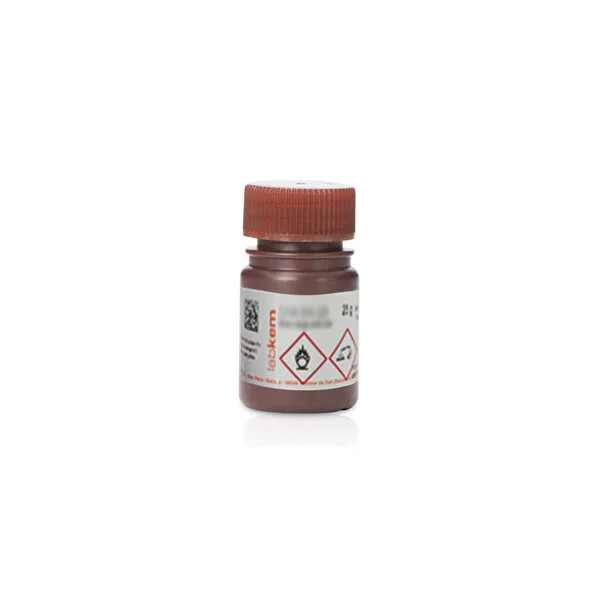
Labbox IPTG, 5g
Introduction
This IPTG induction reagent is mainly used in microbiological and biotechnological laboratories to activate specific genes in bacteria and produce targeted proteins. This product offers decisive advantages, particularly for researchers and production laboratories that require highly pure and reproducible results. It stands out due to its high purity and robust quality compared to other suppliers. It is considered an indispensable component, particularly in protein expression with E. coli systems.
Properties and advantages
This product comes from the LABKEM brand and impresses with its high efficacy and reliable stability. Users benefit from uniform induction and the ability to trigger very specific reactions in defined concentrations. The purity also facilitates the standardization of various work processes and increases the reproducibility of experiments. In addition, smaller and larger quantities can be flexibly adapted, which is particularly important in research and routine environments in order to conserve valuable resources.
Storage at 2 to 8 °C permanently protects the induction reagent from decomposition and maintains its functionality throughout everyday laboratory work. Thanks to clear stability limits, an extremely long shelf life is guaranteed. Even with frequent use, the molecular structure remains intact and supports precise results – an essential factor when it comes to implementing reliable protocols and seamless documentation under laboratory standards.
In addition to the reliable behavior in a biochemical context, the uncomplicated handling is also an advantage: the powder format ensures easy dosing and problem-free dissolution in buffer solutions. Possible contamination is thus further minimized. With a molecular weight of 238.3 g/mol (CAS 367-93-1), the concentration can be precisely calculated and adjusted in the respective experiments.
Technical data
– Molecular weight (MW): 238.3 g/mol
– CAS number: 367-93-1
– Recommended storage temperature: 2 to 8 °C
– Trade name: IPTG from LABKEM
– TARIC code: 38229000
– Form: Powder
– Packaging unit: 5 g
Further characteristic information such as specific purity grades and particle sizes are listed in the technical documents. There you can see in detail the areas in which the product has already been tested and how it can be scaled for different applications. Thanks to its consistent composition, it is designed for demanding laboratories with high quality standards.
Certifications and standards
Although IPTG products are not generally classified as hazardous substances, they still meet high laboratory and production standards. Depending on laboratory requirements, technical data sheets and safety certificates can be obtained from the manufacturer. In addition, extensive quality controls ensure that the product is free of impurities. Users therefore benefit from the greatest possible safety during handling and storage.
Examples of use
– Cloning and expression of recombinant proteins in E. coli: IPTG is used to activate the lac promoter and thus control the synthesis of specific proteins.
– Enzyme production: Numerous enzyme preparations, for example β-galactosidase or protein kinases, are produced in bacterial strains under IPTG control.
– Studies on gene regulation: Studies on the lac operon and other expression systems facilitate the understanding of cellular processes.
– Industrial fermentation: Biotechnological production of enzymes or hormones on a large scale benefits from controlled induction to enable precise production times and quantities.
FAQs
How to achieve the correct dissolution for an induction solution
The powder should be dissolved in a suitable buffer (e.g. water or PBS). A commonly used concentration is 100 mM IPTG. This stock solution is then stored in smaller aliquots at -20 °C to extend the shelf life.
Does the storage temperature affect the efficacy?
Yes, the recommended storage between 2 and 8 °C is crucial to ensure consistent induction performance. Higher or lower temperatures may affect stability.
What concentration is suitable for my expression experiments?
The optimal concentration varies depending on the expression train and target protein. In most cases, common IPTG concentrations are between 0.1 and 1 mM, although the exact value must be determined empirically.
Can this IPTG be used for prokaryotes other than E. coli?
In principle, yes, provided that a lac-based control system is present in the expression systems there. However, it should always be checked whether the organism system used is compatible with IPTG-inducible promoters.
Conclusion
The induction reagent described here is tailor-made for demanding biotechnological applications and research. With its high stability, purity and flexibility in dosing, it helps to achieve reproducible results and efficient processes in the laboratory. Thanks to its easy handling and broad compatibility with various expression systems, the product proves to be a reliable partner in protein research and enzyme production.
| Shipping weight: | 0,01 kg |
| Item weight: | 0,01 kg |

Rezensionen
Es gibt noch keine Rezensionen.