
Beschreibung
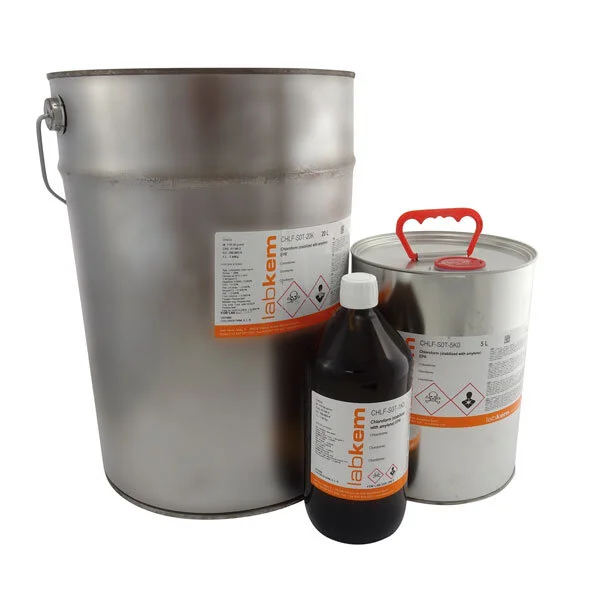
Labbox chloroform (stabilized with amylene) EPR
This high-quality solvent is widely used in many specialized laboratory environments, especially in organic chemistry and pharmaceutical research. Thanks to its stabilization with amylene, it offers reliable purity and consistency, which is particularly important for sensitive analytical procedures or demanding extractions. Its balanced formulation sets this product apart from other chloroform variants and enables precise, reliable and efficient working methods.
Powerful properties and technical features
Chloroform is known for its role as an excellent extraction and solvent used in various fields of research. The product described here has an optimized shelf life due to its stabilization and is predestined for advanced laboratory applications. Care should be taken to use appropriate safety equipment when handling, as it is a substance with toxic properties.
Important technical data at a glance:
– Molecular weight (MW): 119.38
– CAS number: 67-66-3
– UN code: 1888
– Hazard pictograms CLP: GHS06 (toxic), GHS08 (hazardous to health)
– Transport classification: IMDG 6.1 III (UN 1888), ADR 6.1 III (UN 1888)
– Hazard statements (among others): H351 (Suspected of causing cancer), H361d (Suspected of damaging the unborn child), H331 (Toxic by inhalation), H302 (Harmful if swallowed)
– Stabilized with amylene for better shelf life
Further relevant information such as the EC or TARIC code provides information on the classification of this solvent in accordance with international regulations. When handling chloroform, it is advisable to ensure adequate ventilation in addition to the standard protective measures (e.g. safety goggles, gloves, lab coat).
Special standards and guidelines
As chloroform is potentially hazardous to health, it is subject to strict regulations. The respective guidelines govern transportation, storage and use. Users should ensure that they are familiar with regulations such as ADR, IMDG and IATA to prevent possible violations. In addition, careful documentation on the use of this substance is essential.
In terms of quality standards, the product meets common specifications that are recommended in pharmaceutical and chemical laboratories, among others. References to classification in accordance with DIN or ISO standards may be important depending on the area of application.
Concrete application examples
Chloroform is an indispensable solvent in many areas of research and development. The most important areas of application include:
- Organic synthesis: As the product has excellent dissolving and extraction properties, it is ideal for dissolving various organic compounds.
- Pharmaceutical development: Chloroform is used in controlled processes for the production and purification of certain active ingredients.
- Environmental analysis: Organic pollutants such as pesticides can be efficiently extracted from samples using this substance before they are analyzed further.
- Biochemical methods: In combination with other organic solvents such as methanol or ethanol, chloroform can be used for phase extractions in the preparation of proteins or nucleic acids.
These specific examples illustrate why this solvent has a firm place in highly specialized laboratories. It is important that users always remember all safety steps and only use it in suitable laboratory environments with appropriate approval.
FAQs
What precautions should be taken when working with this solvent
?
– Adequate ventilation in the laboratory area is essential to minimize inhalation.
– Wearing protective equipment such as gloves, lab coats and safety goggles is mandatory.
How long can the substance be stored?
Thanks to the stabilization with amylene, the product can be used for longer if stored properly (cool and protected from light). Nevertheless, the printed expiry date should be observed.
Which containers are suitable for storage?
As a rule, the substance is supplied in specified bottles with a secure screw cap. Acid-resistant and chemically inert containers are particularly suitable.
Can the solvent be mixed with other substances?
Mixtures can be useful in standard laboratory applications, but this requires a careful risk assessment. An improper combination with oxidizing or reactive chemicals can be dangerous.
Can reactions with aluminum or other metals occur?
Certain metals can be attacked in the long term. In general, metal equipment should be checked regularly for corrosion and highly resistant materials should be used if necessary.
Conclusion
This stabilized chloroform is ideal for laboratories in organic and pharmaceutical chemistry due to its purity, consistency and versatile fields of application. Users benefit from improved shelf life and controlled properties that support demanding applications. Careful handling, compliance with all safety guidelines and comprehensive knowledge of the prescribed standards and transportation regulations are essential. This enables laboratory professionals to exploit the full potential of this solvent while ensuring a high level of safety.


Rezensionen
Es gibt noch keine Rezensionen.